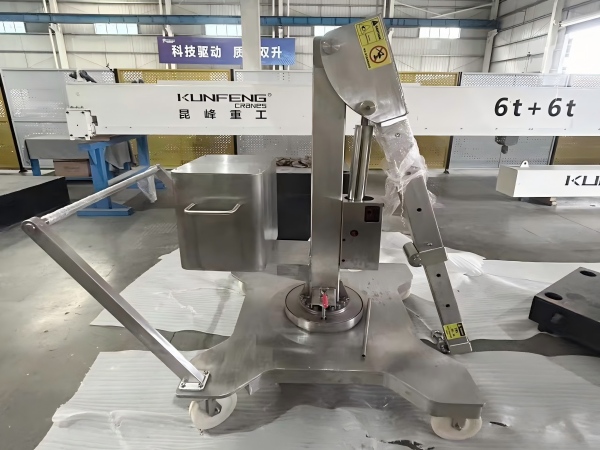
Project Introduction:The ITER project represents the world’s largest and most complex magnetic confinement plasma physics experiment, aiming to demonstrate the scientific and technological feasibility
Project Introduction:
The ITER project represents the world’s largest and most complex magnetic confinement plasma physics experiment, aiming to demonstrate the scientific and technological feasibility of fusion energy. Within such a colossal scientific facility, the infrastructure supporting the reactor is as critical as the reactor itself. Specifically, the instrumentation chambers house thousands of high-precision control and sensor instruments responsible for real-time monitoring and operational regulation.
Maintaining, servicing, and installing equipment inside these restricted, highly sensitive zones present extraordinary engineering obstacles. Standard industrial lifting equipment is fundamentally incompatible with the spatial and environmental constraints of an instrumentation chamber. To address this, our engineering team designed and manufactured a bespoke cleanroom telescopic foldable boom lift equipped with an integrated hoist, tailored explicitly for the operational demands of the ITER facility.
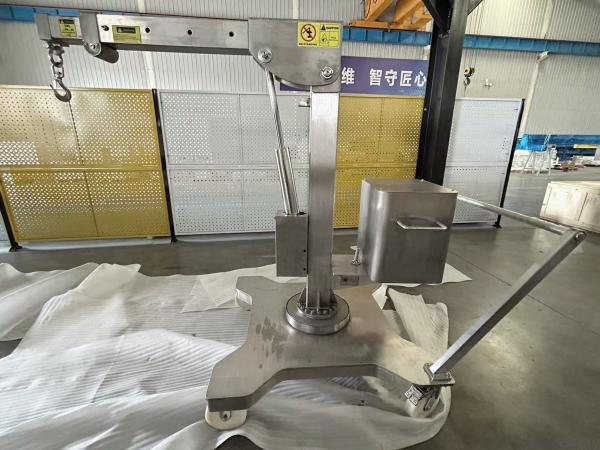
Deploying mechanical equipment near core nuclear and physics instrumentation requires overcoming strict physical and environmental barriers. The engineering team identified three primary operational hurdles during the initial requirement analysis:
Spatial Constraints: The access corridors and internal layouts of the instrumentation chambers are tightly configured. Conventional boom lifts lack the articulation range required to navigate around fixed conduits, cable trays, and rack enclosures.
Cleanroom & Anti-Contamination Standards: The chamber hosts delicate sensors and electronic control units that are vulnerable to particulate contamination, hydraulic fluid leaks, and airborne dust. Any lifting machinery operating here must adhere to stringent cleanroom standards.
Micro-Motion Precision: Due to the density of wiring and fragile instrumentation, collision prevention is paramount. The equipment must deliver millimeter-level precision during lowering, lifting, and slewing operations, eliminating sudden jerks or drift.
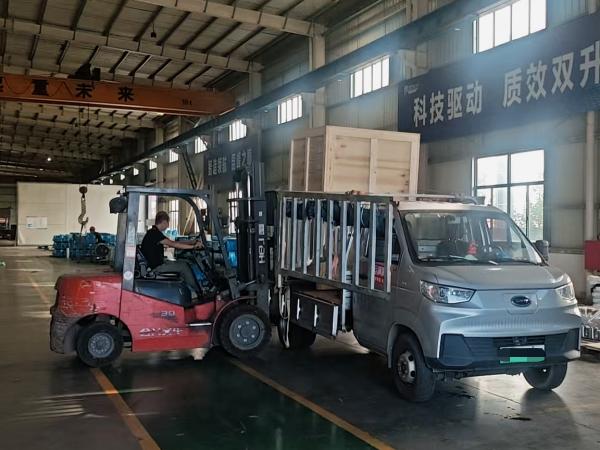
To resolve these challenges, the design abandoned standard off-the-shelf templates, focusing instead on a specialized mechanical architecture optimized for restricted, contamination-sensitive spaces.
Compact Foldable Structure: The unit features a multi-section articulated and telescopic boom configuration. This allows the machine to fold into an extremely compact footprint for transit through narrow doorways, yet extend smoothly to reach elevated target zones inside the chamber.
Integrated Hoisting System with Advanced Safety Limits: Unlike standard aerial work platforms, this model incorporates a specialized heavy-duty hoist. It is engineered with redundant limit switches, anti-stall braking systems, and stepless speed regulation, ensuring stable vertical handling of components without swinging or load displacement.
Clean-Tech Surface and Non-Marking Materials: To satisfy cleanroom protocols, all exposed surfaces utilize high-grade stainless steel components or specialized low-outgassing finishes. The tracks/wheels are made of non-marking, anti-static compounds, and food-grade cleanroom lubricants are utilized across all moving joints to eliminate potential contamination risks.
Specification Category | Technical Parameters |
Equipment Type | Telescopic Foldable Boom Lift with Hoist |
Target Application | Cleanroom Instrumentation Chamber (ITER Standard) |
Max. Working Height | 12.5 Meters |
Rated Load Capacity (with Hoist) | 400 kg |
Boom Configuration | Multi-section Articulated & Telescopic |
Power Source | Zero-Emission Lithium Battery Pack |
Control System | Proportional Electro-Hydraulic with Manual Override |
Following fabrication, the equipment underwent a series of rigorous factory acceptance tests (FAT) followed by on-site verification procedures. The evaluation focused on load-bearing stability, positioning accuracy at maximum extension, and zero-emission verification under sustained operation.
Engineering Evaluation Note:
"When conducting maintenance within ITER's core instrumentation environment, the lifting equipment demonstrated exceptional mechanical stability and spatial flexibility. The micro-motion performance of the telescopic foldable boom precisely matched our strict criteria for particulate control, positioning accuracy, and operational safety, ensuring the integrity of nearby sensor infrastructure remains uncompromised."
— Lead Mechanical Engineer, ITER Project Site
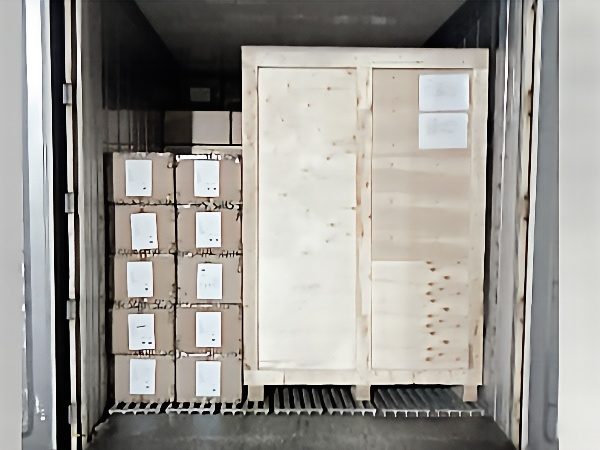
The successful deployment of this specialized lift underscores the importance of custom-engineered mechanical solutions in high-stakes, scientifically sensitive environments. Standard machinery falls short when precision, space constraints, and contamination control intersect.
Looking for custom lifting equipment for extreme environments or restricted spaces?
Partner with KUNFENG to engineer bespoke, high-precision industrial cranes and lifts tailored to your exact operational specifications.



